Retaining Wall Planning · Reston, VA
Concrete Retaining Walls in Reston VA: Plan Grade, Drainage, and Connections
Retaining-wall planning starts with the grade problem and water path, then defines the wall, connections, access, protection, and any specialist input needed for the property.
Published October 9, 2026 · Northern Virginia
Describe the grade problem first
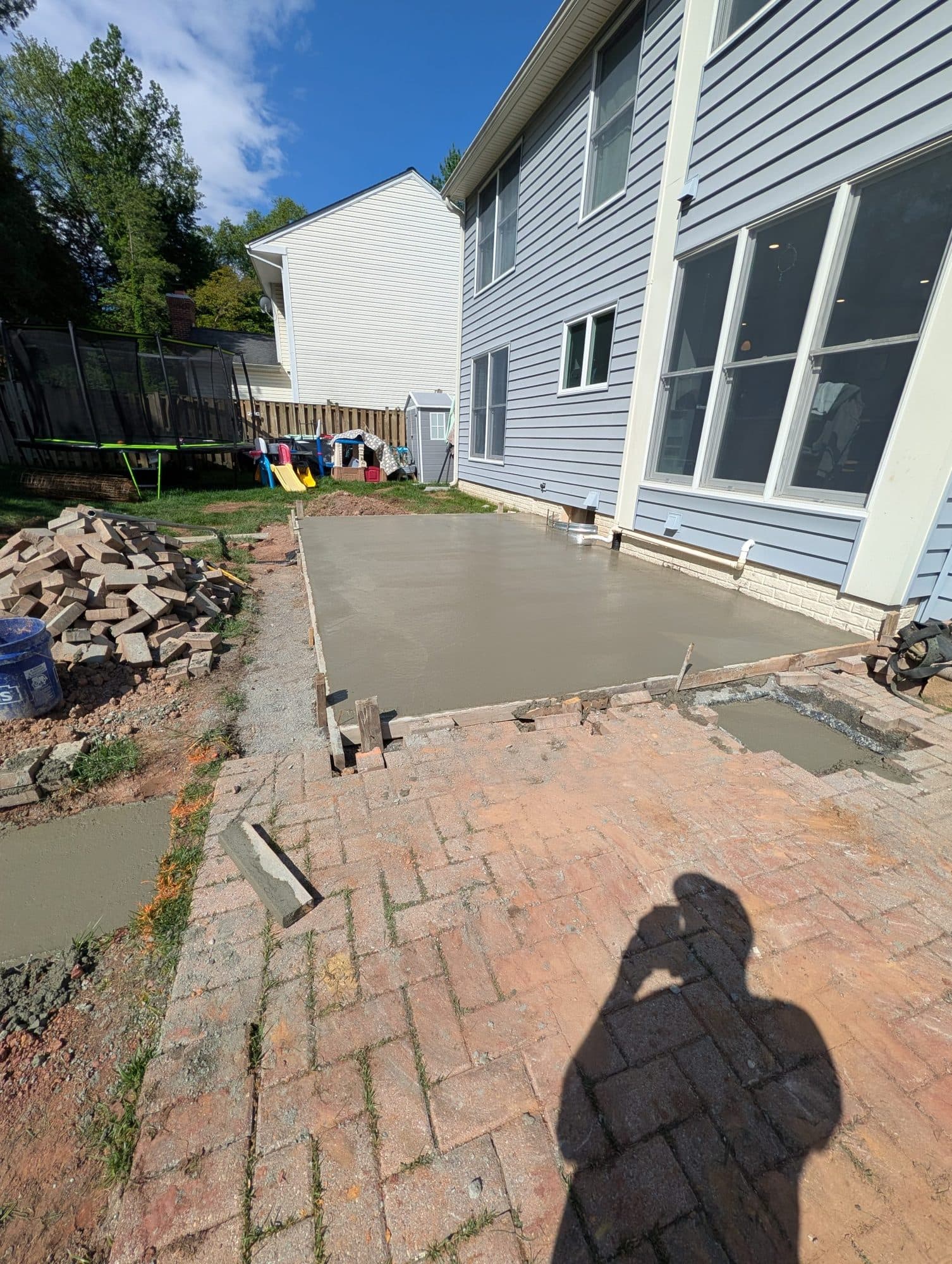
Photograph the slope from several angles and mark where soil, mulch, planting beds, walkways, patios, steps, driveways, or structures meet. Explain what you want the wall to accomplish: hold a grade change, define a planting area, support a path, or coordinate with another outdoor improvement. Avoid assuming that a wall is the correct solution until the site is evaluated.
Observe how water moves through the site
Note where water collects, flows during rain, reaches a low point, or approaches the house, patio, walkway, or neighboring surface. Drainage is part of retaining-wall planning because the wall, backfill, surrounding grade, downspouts, and existing hardscape interact. The final approach depends on site conditions and the project scope.
Review wall type and connected masonry
Concrete Commander offers retaining walls and masonry features alongside patios, walkways, steps, seating walls, and outdoor-living construction. Ask which wall or masonry approach is being considered and how it will meet the existing grade, steps, paths, planting areas, and finished surfaces. Material and structural choices should be documented rather than inferred from a sketch.
Plan access, excavation, and protection
Identify gates, narrow side yards, driveways, landscaping, utilities, fences, patios, and other constraints that affect excavation, material delivery, spoil removal, forms, and cleanup. Photograph surfaces that need protection and discuss where equipment or materials can be staged. Access can affect the sequence even when the wall design is already selected.
Ask when additional design input is needed
A retaining condition may involve grade, soil, drainage, loads, property boundaries, existing structures, or other questions that cannot be resolved by a general article. Ask the contractor what can be evaluated during the site review and whether a survey, engineer, landscape professional, or other specialist should be involved for the specific project.
Request a scope that names the wall and its edges
Ask the proposal to identify demolition, excavation, base, reinforcement, forms or masonry, drainage assumptions, cap or edge details, connections, adjacent concrete, protection, cleanup, and exclusions. For a Reston property, provide dimensions, photos, grade observations, and the outdoor spaces that must connect to the wall.
Frequently Asked Questions
Can a retaining wall solve any sloped-yard problem?
No. The grade, soil, drainage, property conditions, access, loads, and intended use should be evaluated before a wall approach is selected.
Why is drainage important behind a retaining wall?
Water movement can affect the wall, surrounding grade, backfill, patios, walkways, and nearby structures. The project scope should identify the drainage conditions and proposed responsibilities.
Do retaining walls always need an engineer or survey?
The need for specialist input depends on the project and property. Ask the contractor what can be evaluated on site and which questions should be confirmed by a surveyor, engineer, or other professional.
Does Concrete Commander serve Reston?
Yes. Concrete Commander serves Reston and surrounding Northern Virginia communities, subject to project scope and scheduling.
Related Planning Resources
Review the grade before choosing a wall scope
Send photos of the Reston slope, water paths, steps, patios, walkways, planting beds, and access route. Concrete Commander can discuss the site questions needed for a retaining-wall or masonry scope.
Request a Concrete Consultation